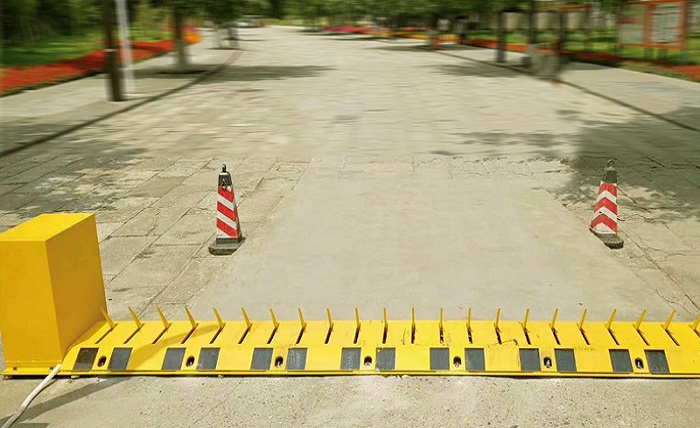
Understanding Tyrekiller Technology in Vehicle Access Control
As part of modern perimeter security systems, tyrekiller devices are increasingly used to enforce controlled vehicle access. Their design focuses on preventing unauthorized entry through a combination of mechanical resistance and directional enforcement.
Unlike other access control solutions, tyrekillers provide a clear and immediate consequence for incorrect vehicle movement, making them particularly effective in regulated environments.
Key Features of Tyrekiller Systems
Tyrekiller systems are engineered to deliver reliability and performance under demanding conditions. Some of their main features include:
- High-resistance steel structure, designed for heavy-duty usage
- Directional spikes, allowing safe passage in one direction only
- Manual or automatic operation, depending on system configuration
- Integration capability, with gates, barriers, and access control units
These characteristics make them suitable for both standalone installations and complex security infrastructures.
Safety and Operational Considerations
Despite their effectiveness, tyrekillers must be used with careful planning to ensure safe operation. Proper signage, clear road markings, and integration with traffic management systems are essential to prevent accidental damage.
Operators must ensure that:
- Access points are clearly visible to approaching drivers
- Entry and exit routes are well defined
- Control systems are properly synchronized with other security devices
These measures help reduce the risk of unintended incidents while maintaining high security standards.
Comparing Tyrekillers with Other Access Control Solutions
In the broader landscape of vehicle access control, tyrekillers are often used alongside other systems such as automatic bollards, gates, and road blockers.
While bollards are designed to physically block vehicles and gates control entry through opening mechanisms, tyrekillers focus specifically on directional enforcement. This makes them particularly effective in preventing wrong-way access in controlled areas.
In many cases, combining multiple solutions provides a more comprehensive security strategy.
Industrial and Commercial Use Cases
Tyrekiller systems are widely adopted across various sectors, including:
- Warehouses and distribution centers, to manage inbound and outbound traffic
- Corporate facilities, ensuring controlled parking access
- Transportation infrastructure, such as ports and logistics terminals
- Energy and utility sites, where restricted access is critical
In these contexts, reliability and durability are key factors in system selection.
Companies like MAC, operating in the access control sector, develop solutions tailored to these environments, focusing on performance, safety, and long-term usability.
The Role of Tyrekillers in Modern Security Planning
As security strategies evolve, the importance of combining physical and digital systems becomes increasingly evident. Tyrekillers represent a crucial element in this approach, offering a straightforward yet highly effective method to enforce access rules.
Their role is not only to prevent unauthorized entry but also to support the overall efficiency of vehicle flow management within controlled environments.